
 edward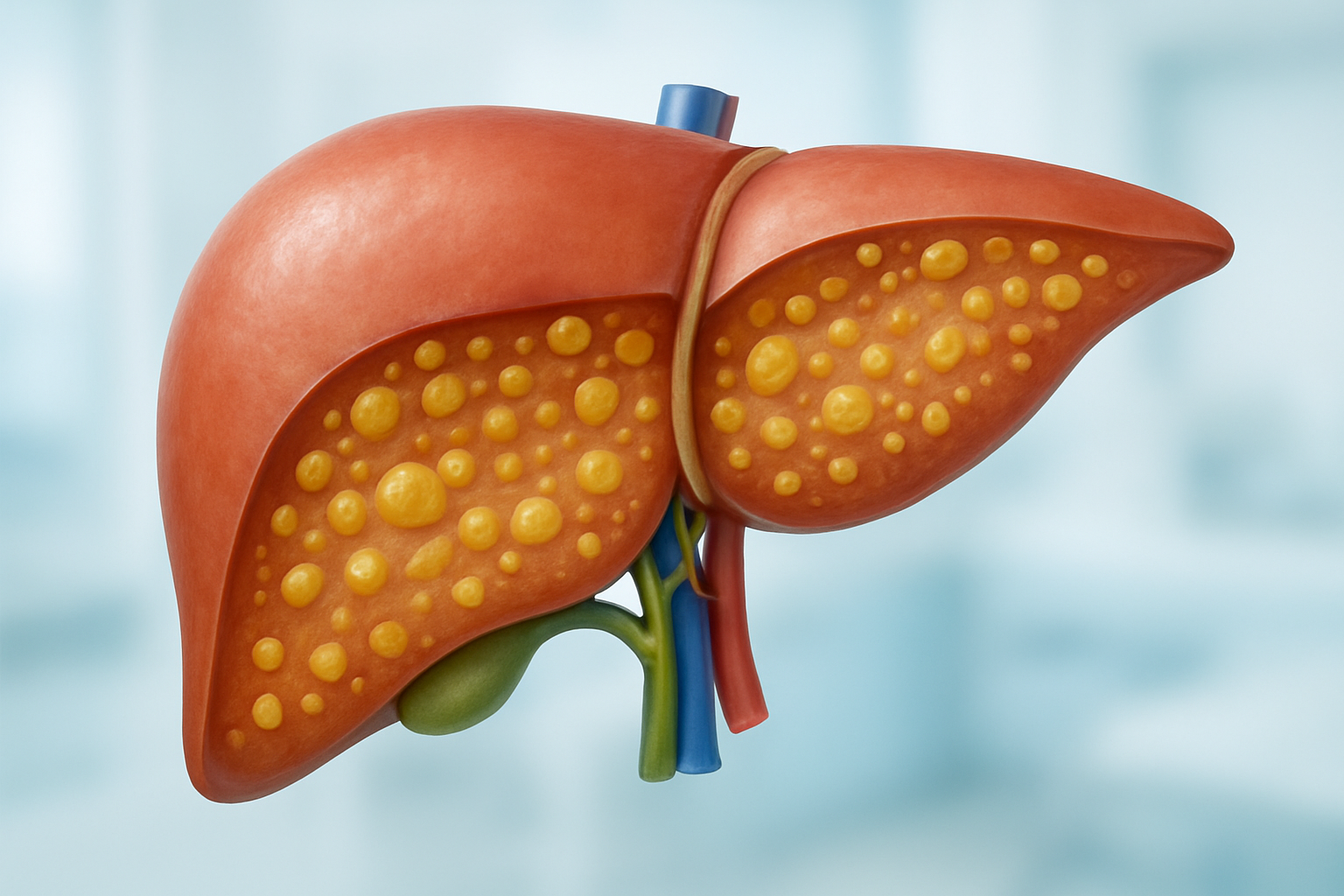
Non-Alcoholic Fatty Liver Disease (NAFLD) recently updated in clinical terminology to Metabolically Dysregulated-Associated Steatotic Liver Disease (MASLD)—is one of the most common chronic liver disorders in urban India. Characterized by excessive triglyceride accumulation inside liver cells (hepatocytes) in individuals who consume little to no alcohol, NAFLD is closely tied to insulin resistance, sedentary habits, abdominal weight gain, and diets high in refined carbohydrates.
In This Article
- Limitations of Routine Abdominal Sonography
- Non-Invasive Diagnostics: The Role of FibroScan
- Diagnostic Feature
- Standard Abdominal Ultrasound
- FibroScan (Transient Elastography)
- Evidence-Based Protocol to Reverse Fatty Liver
- Trusted Liver Care at Gastronaut Clinic, Mira Road
PROGRESSION OF FATTY LIVER DISEASE
STAGE 1: Simple Steatosis ──► Fat accumulates in liver cells (>5% of hepatocytes)
STAGE 2: Steatohepatitis ──► Fat causes active cellular inflammation & injury (NASH)
STAGE 3: Advanced Fibrosis ──► Chronic inflammation creates stiff scar tissue
STAGE 4: Liver Cirrhosis ──► Irreversible scarring, architectural disruption, liver failure
The danger of fatty liver lies in its silent nature. The liver lacks sensory pain fibers within its substance, meaning significant fat accumulation and inflammation can progress for years without causing noticeable pain or jaundice.
Limitations of Routine Abdominal Sonography
Many individuals discover they have a fatty liver incidentally during a routine annual health checkup or sonogram. However, standard abdominal ultrasound has notable diagnostic limitations:
- It only identifies fat after more than 20–30% of liver tissue is already infiltrated.
- It provides a subjective visual impression (Grade 1, 2, or 3) rather than precise, numeric measurements.
- Most importantly, ultrasound cannot measure liver stiffness (fibrosis).
Fibrosis—the formation of microscopic scar tissue—is the primary factor that determines whether a fatty liver will remain benign or progress toward cirrhosis. This makes advanced diagnostic tools essential.
Non-Invasive Diagnostics: The Role of FibroScan
A consultation with an expert gastroenterologist in Mira Road allows patients to access advanced non-invasive liver assessments, particularly Transient Elastography (FibroScan):
Diagnostic Feature |
Standard Abdominal Ultrasound |
FibroScan (Transient Elastography) |
|
Fat Quantification |
Subjective visual estimate (Grade 1–3) |
Quantitative CAP Score () |
|
Fibrosis Detection |
Only detects late structural cirrhosis |
Detects early microscopic stiffness () |
|
Test Duration |
15–20 minutes with gel |
Under 10 minutes, completely painless |
|
Clinical Value |
General overview |
Accurate staging and treatment monitoring |
By calculating the Controlled Attenuation Parameter (CAP) for fat and liver stiffness in kilopascals (), a super-specialist can determine whether your condition is in an early, fully reversible phase or requires intensive medical therapy.
Evidence-Based Protocol to Reverse Fatty Liver
Because the liver has remarkable regenerative capabilities, early-stage steatosis and mild fibrosis can be completely reversed with a disciplined, medically guided protocol:
4-PILLAR PROTOCOL FOR LIVER REGENERATION
1. Targeted Weight Management – Losing 7–10% of total body weight reduces liver fat and inflammation.
2. Dietary – Eliminate high-fructose corn syrup, refined flours, and trans fats and emphasize fibrous vegetables, lean proteins, nuts, and omega-3s
3. Cardiovascular & Resistance – 150 minutes of moderate aerobic activity weekly to improve insulin
4. Super-Specialist Medical – Hepatoprotective antioxidants, insulin sensitizers, and lipid control|
Regular follow-up blood profiles (including liver enzymes, AST/ALT ratios, and lipid panels) alongside scheduled non-invasive scans ensure your progress is measured accurately.
Trusted Liver Care at Gastronaut Clinic, Mira Road
For residents in Mira Road, Bhayandar, and Dahisar seeking specialized liver evaluations, Gastronaut Clinic offers complete diagnostic and therapeutic hepatology care.
Under the leadership of Dr. Raajeev Hingorani, a premier gastroenterologist in Mira Road and experienced hepatologist, patients receive clear guidance, comprehensive liver assessments, and actionable reversal protocols designed to protect long-term metabolic and liver health
What You Need to Know
- Non-Alcoholic Fatty Liver Disease (NAFLD) has been updated to Metabolically Dysregulated-Associated Steatotic Liver Disease (MASLD) and is prevalent in urban India.
- NAFLD is characterized by excessive triglyceride accumulation in the liver and is associated with insulin resistance, sedentary lifestyle, and high refined carbohydrate intake.
- The progression of fatty liver disease includes four stages: Simple Steatosis, Steatohepatitis, Advanced Fibrosis, and Liver Cirrhosis, with increasing severity and risk of liver failure.
- Standard abdominal ultrasound is limited in diagnosing fatty liver disease because it only detects significant fat accumulation after more than 20–30% of liver tissue is affected.
- FibroScan (Transient Elastography) provides advanced non-invasive liver assessments that can measure fat and liver stiffness more accurately than standard ultrasound.
- The 4-PILLAR PROTOCOL for liver regeneration emphasizes targeted weight management, dietary changes, cardiovascular activity, and super-specialist medical care for reversing early-stage liver disease.